
Is Singapore's AI Education Really Enough? A Look Beyond the Maths Syllabus
Is coding enough? Rethinking Singapore's AI education strategy
Preparing our children for an AI-driven world is the top concern for many Singaporean parents. The Ministry of Education (MOE) has integrated computational thinking and digital literacy into the curriculum, but to be truly AI-ready, students need more than just what's in the current mathematics syllabus. A holistic approach that builds critical thinking and ethical grounding alongside technical skills is what will set them up for success.
Is the current MOE Maths syllabus truly 'AI-ready'?
Parents often ask me if their child's strong grades in Mathematics guarantee a future in tech. The answer is not as straightforward as we might hope. While MOE has started weaving computational thinking into the curriculum through initiatives like the Code for Fun programme, there's a growing concern among academics that our core mathematics syllabuses are lagging.
One computing professor recently highlighted a critical gap. The 2026 "O" Level E. Maths, A. Maths and even the “A" Level H2 Mathematics syllabuses are still heavily weighted towards traditional engineering fields. I see the result of this firsthand. University computing students, many of whom scored distinctions in H2 Mathematics, often find themselves struggling in their very first course on discrete mathematics. This subject is a fundamental building block for AI and computing, yet it remains underemphasised in their pre-university education.
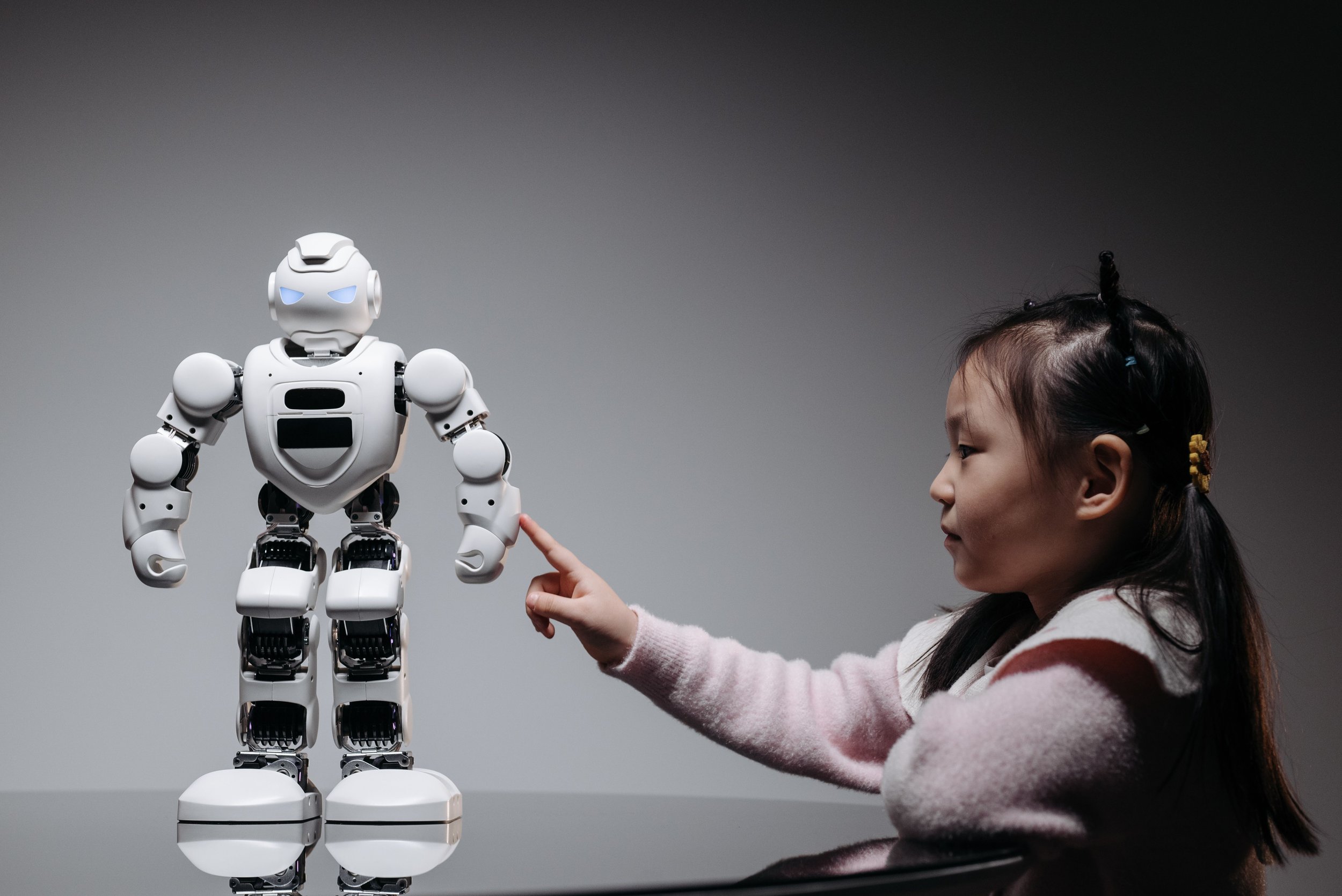
Image Credit: Pavel Danilyuk
What MOE is doing about Singapore AI education
To its credit, the MOE is not standing still. The national strategy is broader than just one subject and focuses on building what it calls 21st-century competencies. These are the soft skills: critical thinking, information skills and digital literacy. These are crucial.
We're also seeing significant structural changes that will directly impact our children:
Computing in secondary schools:
From 2026, Computing will be offered progressively to all upper secondary students. This is a massive step in normalising computational thinking as a core skill.
AI skills for all tertiary students:
By 2027, all students entering our Institutes of Higher Learning (IHLs), including universities, polytechnics and the ITE, will learn AI skills as part of their studies. This move ensures a baseline AI competency for every graduate, regardless of their chosen field.
These initiatives show a clear long-term commitment. However, the curriculum gap in secondary school Mathematics remains a present-day issue that parents need to be aware of.
Beyond coding: The AI skills your child really needs
The conversation around AI education often gets stuck on 'learning to code'. That's only a small part of the picture. The World Economic Forum and other experts stress a different set of skills that go beyond pure programming. True AI literacy is about working with and critically evaluating AI systems.
Key skills for an AI-ready future
Algorithmic and Critical Thinking:
Understanding how an AI reaches a conclusion and being able to spot potential flaws or bias in its output.
Prompt Engineering:
The new art and science of asking AI the right questions to get the best results. This is a skill of communication and logic, not just code.
Ethical Grounding:
Being able to ask 'Should we do this?' not just 'Can we do this?'. This involves debating AI's role in society, fairness and privacy.
Creativity and Original Thought:
As AI handles routine tasks, the value of human originality and the ability to connect disparate ideas will only increase.
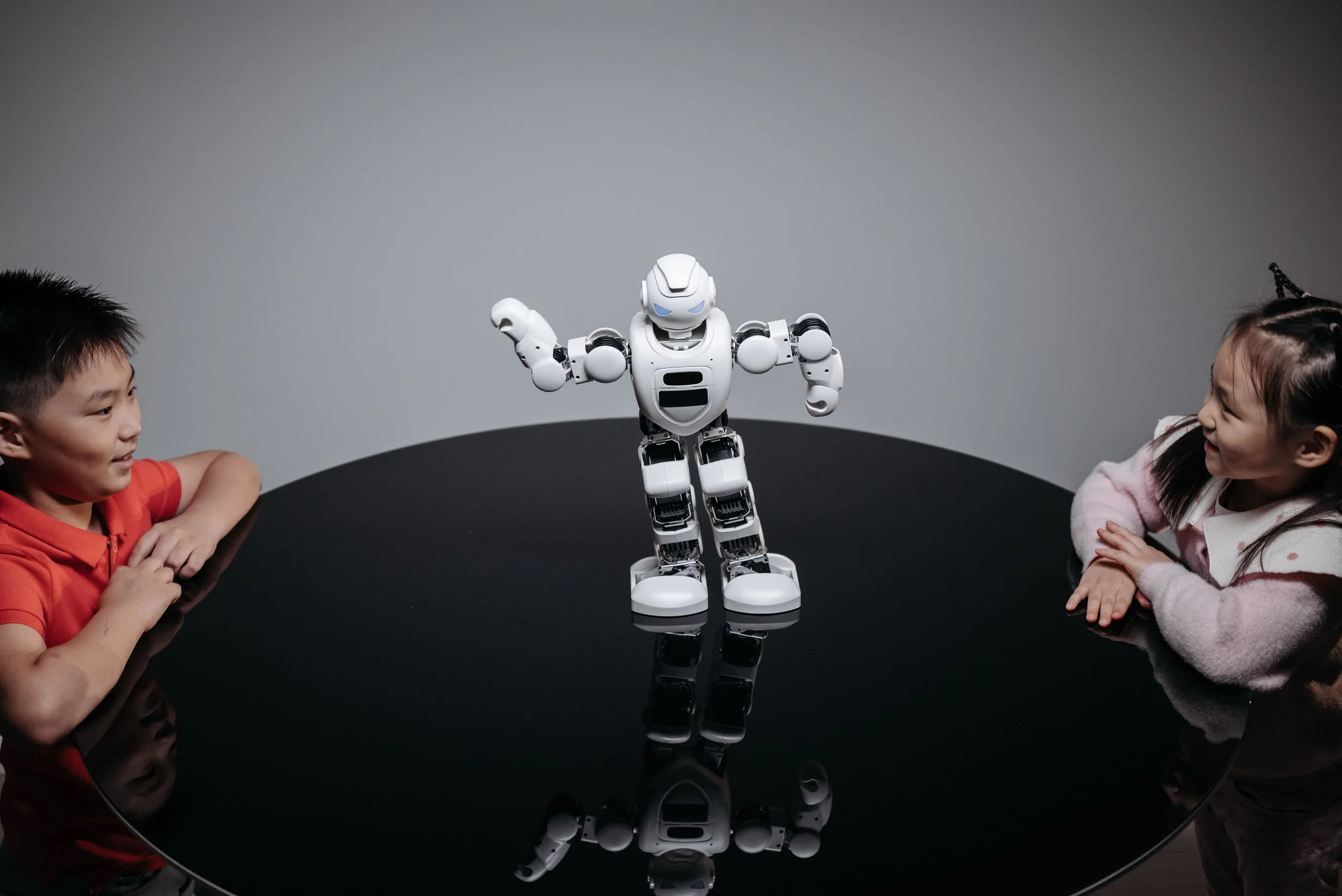
Image Credit: Pavel Danilyuk
A parent's action plan: How to bridge the gap at home
Waiting for the syllabus to catch up is not a strategy. We can empower our children from home by nurturing the right mindset.
1. Encourage 'Healthy Scepticism':
When your child uses an AI tool for homework, prompt them with questions. 'How do you think it got that answer?' 'Can you find a source to verify it?' 'What were the limitations?' This builds critical evaluation skills.
2. Connect Schoolwork to the Real World:
Explain how "O" Level concepts like statistics and probability are the very engine that powers Spotify's recommendations or a YouTube feed. This makes abstract concepts tangible.
3. Champion the 'Human' Skills:
Double down on activities that AI can't replicate. Encourage debating, public speaking, creative writing and collaborative projects. These skills build the confidence and originality that will allow them to direct AI, not be directed by it.
Ultimately, our goal isn't to raise a generation of coders. It's to raise a generation of critical, adaptive thinkers. The government is laying the foundation for Singapore AI education, but the most crucial work of building a resilient and questioning mind begins with the conversations we have at home.
Image Credit: Growtika
Frequently asked questions
Is my child ready for an AI career if they are good at O-Level Mathematics?
Strong grades in O-Level Mathematics are helpful but may not be enough to fully prepare a student for an AI career. The current mathematics syllabus is still heavily weighted towards traditional engineering fields and underemphasises discrete mathematics, which is a fundamental subject for computing and AI.
What is MOE doing to improve Singapore AI education in schools?
The Ministry of Education (MOE) is improving Singapore AI education by making Computing a subject for all upper secondary students from 2026 and ensuring all tertiary students learn AI skills by 2027. This national strategy is part of a broader focus on the MOE AI curriculum which also aims to build 21st-century competencies like critical thinking and digital literacy across the Singapore education system.
What are the most important AI skills for students besides coding?
Important AI skills for students beyond coding include critical thinking, prompt engineering, ethical grounding and creativity. True AI literacy involves understanding how AI systems work, asking them effective questions, considering the ethical implications of their use and generating original ideas that AI cannot replicate.
Why are the current O-Level and A-Level Mathematics syllabuses not enough for AI?
The current O-Level and A-Level Mathematics syllabuses are considered insufficient for AI by some experts because they lack a strong focus on discrete mathematics. This subject is a fundamental building block for computing, but syllabuses for exams like A-Level H2 Mathematics are still heavily weighted towards traditional engineering, creating a knowledge gap for students pursuing AI-related university courses.
How can I help my child develop AI literacy at home?
You can help your child develop AI literacy at home by encouraging critical evaluation of AI tools, connecting school concepts like statistics to real-world AI applications and promoting activities that build human skills like creativity and public speaking. This approach helps build a questioning mindset that empowers them to direct AI effectively, rather than just using it passively.
Find the Right Learning Support at Every Stage
Building strong study habits takes patience, especially when academic demands pick up. If your child needs an extra hand making difficult topics click, Geniebook offers targeted support across every stage. Find AI-personalised worksheets and live classes for primary and secondary school at Geniebook, comprehensive secondary, IB and JC subject tuition at AfterSkool or dedicated physics masterclasses at Tuition Physics and Best Physics Tuition.