
Why Sec 1-2 Students Lose Marks in Science Practicals (and How to Fix It)
Why Sec 1-2 students lose marks in science practicals (and how to fix it)
Poor practical planning, from vague hypotheses to uncontrolled variables, is the primary reason many secondary 1 and 2 students lose critical marks in their science assessments. Mastering these foundational skills isn't just about passing the next exam. It's about building the analytical mindset required for the "O" Levels, "A" Levels and beyond, starting with the 2027 cycle.
Many parents see the lab session as a break from theory, but in the Singapore MOE curriculum, it's where understanding is truly tested. A single overlooked detail in the planning stage can invalidate an entire experiment. This guide breaks down the most common pitfalls and provides a clear path to fixing them.
The four core planning pitfalls costing your child marks
Before a single Bunsen burner is lit, marks are already on the line. Most errors stem from four foundational gaps in experimental design.
Missing or vague hypothesis: Students often jump into the procedure without a clear, testable statement. A hypothesis isn't a guess. It's a precise prediction (e.g., "As temperature increases, the rate of enzyme activity will increase until it denatures"). Without it, the experiment lacks direction.
Uncontrolled variables: This is a major reason experiments fail. If a student is testing how light intensity affects photosynthesis but also allows the temperature to fluctuate, the results are invalid. They must identify the independent (what you change), dependent (what you measure) and all crucial controlled variables (what you keep constant).
Vague data collection plans: A plan that says "measure the temperature" is not enough. It should specify: "Record the temperature in degrees Celsius (°C) every 30 seconds for 5 minutes using a laboratory thermometer." This includes units, frequency and duration.
Overlooking safety risks: MOE standards are strict. Students must identify potential hazards, like handling chemicals, using open flames or sharp objects, and state specific, actionable precautions (e.g., "Wear safety goggles when heating the solution to prevent splashes").
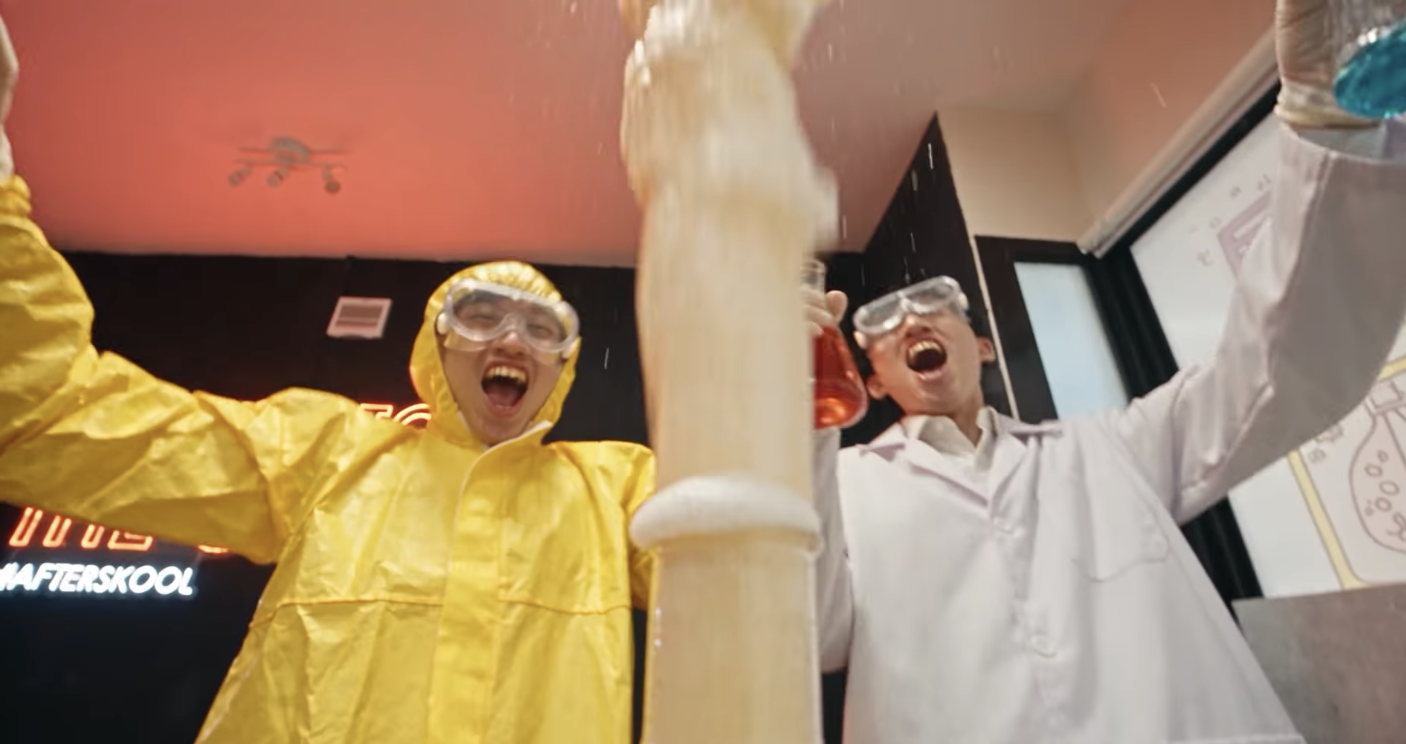
Here’s our Chemistry tutor Gerald having fun with experiments in class! (P.S. Do not try this at home!)
Beyond planning: Common technical mistakes in the lab
Even with a good plan, execution matters. These technical errors are frequent sources of lost marks and are a key focus in any good science tuition class.
Insufficient precision: Reading the meniscus of a measuring cylinder from the wrong angle or failing to zero an electronic balance are classic examples. In physics, this extends to using a metre rule or stopwatch correctly. These details seem small but directly impact the reliability of the data.
Poor graph plotting: Marks are often lost for incorrect scaling, missing labels on axes (with units) or using the wrong type of graph. A line of best fit should be drawn with a ruler, not a rough sketch. Strong graphing skills often overlap with mathematical ability, a connection sometimes explored in specialised Maths and physics tutoring.
Vague observations: In a biology or chemistry experiment, writing "the solution changed colour" is insufficient. A good observation is objective and detailed: "The blue copper sulphate solution turned colourless, and a reddish-brown solid was deposited at the base of the test tube."
Missing units: A measurement of '15' means nothing. Is it 15 cm, 15 g or 15°C? Forgetting units in tables, graphs and final calculations is a guaranteed way to lose marks.
Why these skills matter beyond the Sec 2 exam
These skills are not just for lower secondary. They are the bedrock for the "O" Level Science Practical Exam and are even more critical for students aiming for JC. The H2 science practical papers (Paper 4) can be up to 2 hours and 30 minutes long and contribute a hefty 20% to the final "A" Level grade.
Furthermore, Singapore's national focus on innovation, as outlined in the RIE2030 (Research, Innovation and Enterprise) plan, depends on a workforce skilled in systematic inquiry. The ability to design a valid experiment in secondary 1 is the first step towards the complex problem-solving required in research and technology. The foundational chemistry skills learned now are what enable a student to tackle advanced topics later, perhaps with specialised chemistry tutoring for their "A" Levels.

Image Credit: Rao Qingwei
How can science tuition help build practical confidence?
In a busy school lab, it’s tough for a teacher to check every student's experimental plan before they begin. This often means mistakes in variable control or data collection methods are only discovered after the practical is complete, when marks have already been lost. A structured science tuition programme can bridge this gap by providing dedicated coaching on the planning phase, offering feedback that corrects errors before they become ingrained habits.
At our centre, our experienced tutors focus on the 'why' behind each step, ensuring students don't just follow instructions but truly understand experimental design. This proactive feedback loop is crucial for building the confidence and competence needed to excel in practical assessments.
By addressing these common pitfalls early, your child can develop the precision needed for success in their entire science journey. To see how our expert-led programmes build these essential skills, find out more about our secondary science programmes.
Frequently asked questions
Why do Sec 1-2 students lose marks in science practicals?
Sec 1-2 students primarily lose marks in science practicals due to poor planning and foundational errors, such as failing to define a testable hypothesis, neglecting to identify controlled variables, using vague data collection methods and overlooking safety risks. These planning pitfalls, combined with technical mistakes like incorrect reading of instruments and poor graph plotting, frequently result in significant mark deductions during school assessments.
How can science tuition help my child improve their practical assessment scores?
A science tuition class helps students improve by providing dedicated, proactive coaching on the experimental planning phase before they begin their lab work. Unlike a busy school lab where teachers may be unable to check every student, a tutor provides immediate feedback on variable control and data collection methods, allowing students to correct mistakes before they become ingrained habits.
What are the common technical mistakes students make during science practical exams?
Common technical mistakes include failing to achieve sufficient precision when reading measuring instruments like balances or thermometers, drawing inaccurate graphs without proper scaling or labels, writing vague qualitative observations and neglecting to include units in tables and calculations. These errors are often addressed during focused sessions such as math physics tutoring or general science practice to ensure students understand the precision required for high marks.
Is specialized secondary biology tuition necessary for practical exams?
Specialized secondary biology tuition can be highly beneficial because it provides focused drilling on essential skills like identifying apparatus, creating structured data tables and conducting precise observations. Since practical exams require students to act systematically, expert guidance ensures they can replicate experiments accurately and learn the correct way to document findings, which is crucial for building the confidence needed for future O Level examinations.
How does experimental planning at the Sec 1-2 level impact future O Level and A Level performance?
Experimental planning skills developed at the Sec 1-2 level form the bedrock for higher-level science, where practical papers can contribute as much as 20 percent to a final A Level grade. Mastery of systematic inquiry and independent variable control in lower secondary creates the analytical mindset required for the more rigorous and lengthy practical assessments students will face in later years, such as the H2 science papers.
Meet Kelvin: former MOE teacher with 20+ years of experience, taking students from fail to distinction.
Find the Right Learning Support at Every Stage
Building strong study habits takes patience, especially when academic demands pick up. If your child needs an extra hand making difficult topics click, Geniebook offers targeted support across every stage. Find AI-personalised worksheets and live classes for primary and secondary school at Geniebook, comprehensive secondary, IB and JC subject tuition at AfterSkool or dedicated physics masterclasses at Tuition Physics and Best Physics Tuition.