
IB CAS Reflections: How to Show the Impact Examiners Want
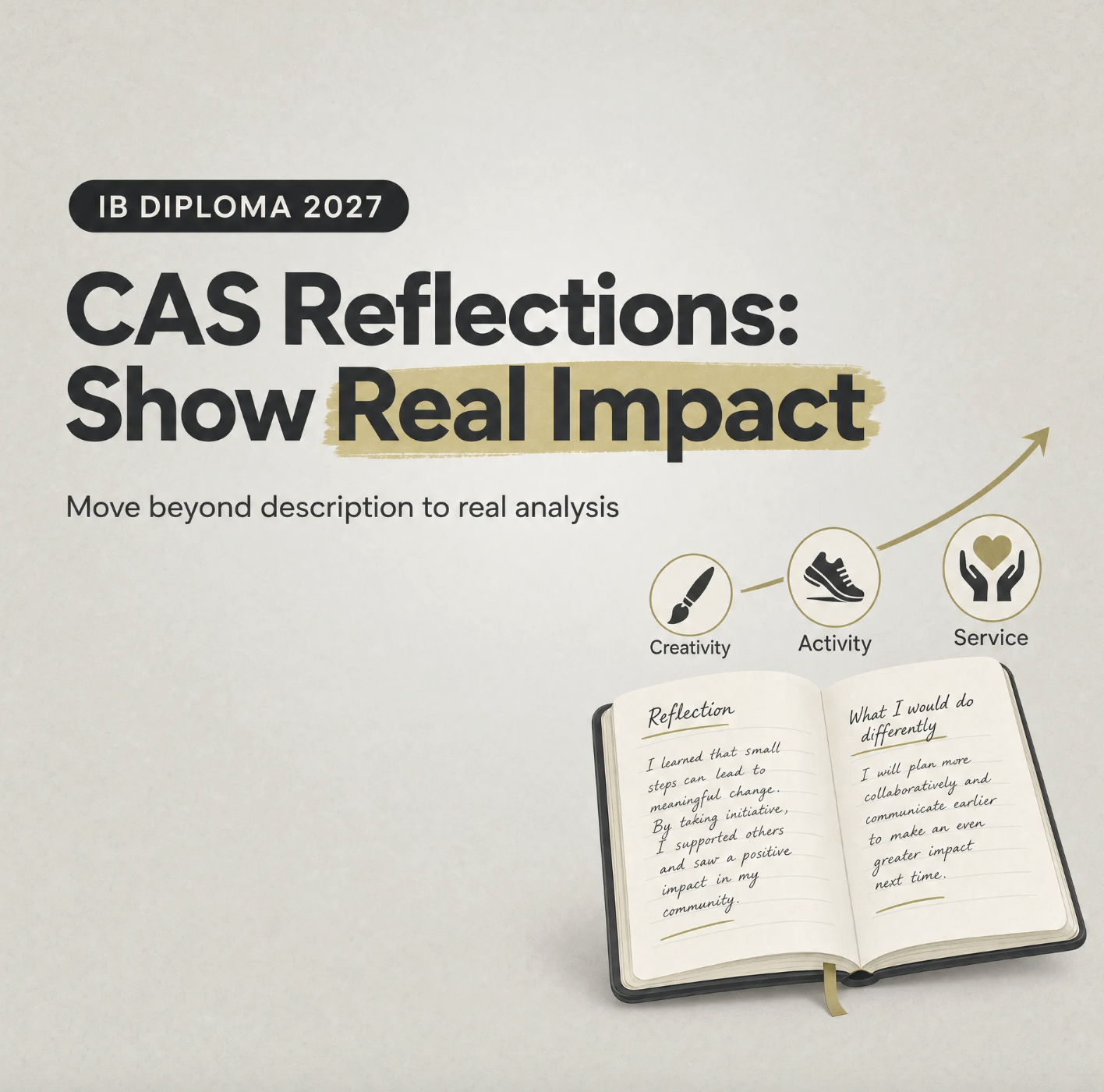
What makes a good IB CAS reflection?
A strong IB CAS reflection is not a diary entry about your activities. It is analytical evidence of your personal growth, directly linked to the seven CAS Learning Outcomes. While Creativity Activity Service (CAS) is not graded, it is a mandatory component of the IB Diploma. Your CAS coordinator needs to see credible proof of learning and development, not just a polished summary of what you did.
The goal is to show what you learned, not just tell what happened. This distinction is what separates a portfolio that merely passes from one that demonstrates genuine engagement and critical thinking, a skill vital across all subjects covered in high-quality IB tuition.
How do I structure my IB CAS reflections for impact?
The International Baccalaureate (IB) doesn't mandate a specific word count or format, but a powerful reflection focuses on a single, meaningful moment. Instead of writing a long narrative, use a simple framework to analyse an experience. Many schools in Singapore have their own CAS handbooks and logging platforms, so always check those first.
For a quick and effective approach, use this “60-second filter” to structure your thoughts for each IB CAS reflection:
One specific moment: What single event, conversation or challenge stands out? Not the entire timeline.
One genuine challenge: What was difficult, uncomfortable or unexpected about that moment?
One learning outcome: Which of the seven CAS learning outcomes does this moment actually demonstrate?
One change in perspective: What do you think, feel or do differently now because of this experience?
A focused reflection of one to three paragraphs is often enough to cover these points with sufficient depth. Reserve longer entries for major milestones, project failures or significant ethical dilemmas.

Image Credit: Malte Luk
Why honesty about failure is your secret weapon
Coordinators read hundreds of IB CAS reflections. Portfolios filled with nothing but success stories and perfectly executed plans often feel inauthentic. The reflections that stand out are the human ones, those that honestly explore challenges, failures and even awkward moments.
Did a team project suffer from miscommunication? Did an event you planned have a lower turnout than expected? Write about it. Analysing what went wrong and what you learned from the setback demonstrates resilience, critical thinking and self-awareness. Referencing IB Learner Profile traits like “risk-taker” or “principled” is only impactful when you can point to a specific, difficult situation where you earned it.
The 7 CAS learning outcomes: a portfolio checklist for 2027
To successfully complete CAS, you must provide evidence for each of the seven learning outcomes at least once. Keep this checklist handy to track your progress and ensure your portfolio is comprehensive. Your reflections, supported by evidence like photos or testimonials, are the proof.
Identify strengths and develop areas for growth: Are you aware of what you’re good at and what you need to improve?
Demonstrate that challenges have been undertaken, developing new skills: Have you stepped out of your comfort zone?
Demonstrate how to initiate and plan a CAS experience: Can you take an idea from concept to execution?
Show commitment to and perseverance in CAS experiences: Did you stick with your activities even when it was difficult?
Demonstrate the skills and recognise the benefits of working collaboratively: Can you work effectively with others?
Demonstrate engagement with issues of global significance: Do you understand the wider context of your actions? For example, connecting a local recycling drive to global climate change.
Recognise and consider the ethics of choices and actions: Have you thought about the moral implications of your decisions?

Image Credit: Anastasia Shuraeva
My reflections are too descriptive. How can I improve?
The most common hurdle for IB students is shifting from describing an event to analysing its meaning. It’s easy to write “we organised a beach clean-up and collected 10 bags of rubbish”. It is much harder to explain what that experience revealed about teamwork, environmental responsibility or your own leadership skills. This gap between description and analysis is where marks are lost in essays and where CAS portfolios fall short.
This skill, interpreting the gap between your expectations and the reality of a situation, is a sign of advanced critical thinking. For students struggling to make this leap, structured guidance can be invaluable. Working with an experienced IB private tutor or through a dedicated IB tuition programme provides coaching on how to ask deeper questions of your experiences. An expert can help you refine your analytical voice and ensure your reflections truly demonstrate personal growth.
Final thoughts: making your CAS journey count
Your IB CAS reflections are more than a requirement. They are a curated story of your growth throughout the Diploma Programme. By focusing on honest analysis of specific moments and linking them clearly to the seven learning outcomes, you can create a portfolio that is both impactful and authentic. It’s a chance to understand yourself better before stepping into university and the world beyond.
If your child needs help transforming their CAS experiences into impactful reflections, find out more about our specialised IB tuition programmes.

Image Credit: Andy Barbour
Frequently asked questions
How do I write a good IB CAS reflection?
A strong IB CAS reflection focuses on one specific moment of challenge or learning rather than summarising an entire activity. You can use a 60-second filter to structure your writing by identifying a single moment, a genuine challenge, the relevant learning outcome and your personal change in perspective. This approach helps you move beyond descriptive diary entries and provides the analytical evidence of growth that IB coordinators look for.
Do I need private tutors for CAS?
You do not strictly need a private tutor for CAS, but an IB private tutor or high-quality IB tuition can help if you struggle to shift your writing from descriptive to analytical. These professionals can guide you on how to articulate your personal growth and critical thinking, which is a skill that translates into better performance across all subjects. They provide the structured feedback needed to ensure your portfolio meets the specific requirements of the Singapore IB diploma.
How can I improve my CAS reflections if they are too descriptive?
To improve IB CAS reflections that are too descriptive, focus on analysing the gap between your expectations and the reality of the situation. Instead of just stating what happened, explain what the experience revealed about your leadership, teamwork or ethics. This shift from describing events to reflecting on the meaning is a sign of advanced critical thinking and will make your portfolio significantly stronger.
Why is it okay to write about failure in CAS?
Writing about failure in your IB CAS reflections is encouraged because it provides authentic evidence of your resilience, self-awareness and critical thinking. Coordinators review hundreds of entries and portfolios that show only perfect success often feel inauthentic. By honestly discussing setbacks, miscommunications or lower-than-expected turnouts, you demonstrate that you are a genuine risk-taker who can learn and grow from difficult experiences.
Where can I find help for specific IB subjects if I am struggling?
Students struggling with specific academic subjects can access support from IB tutors online or specialists such as an IB biology tutor to manage the workload of the Singapore IB diploma. While these tutors primarily focus on subject-specific content and exam techniques, the analytical skills developed through their coaching can also improve your overall ability to reflect on your CAS experiences. Finding the right academic support helps ensure you maintain a balance between your community activities and your studies.

Meet our star Math tutor Jimmy who has more than a decade of experience guiding IB students from poor grades to an ‘A’!

Meet our star Chemistry tutor Gerald, with over 12 years of teaching experience guiding IB students from a ‘F’ to ‘A’!
Find the Right Learning Support at Every Stage
Building strong study habits takes patience, especially when academic demands pick up. If your child needs an extra hand making difficult topics click, Geniebook offers targeted support across every stage. Find AI-personalised worksheets and live classes for primary and secondary school at Geniebook, comprehensive secondary, IB and JC subject tuition at AfterSkool or dedicated physics masterclasses at Tuition Physics and Best Physics Tuition.