
DSA-Sec 2027: How to Build a Standout Portfolio That Schools Actually Want
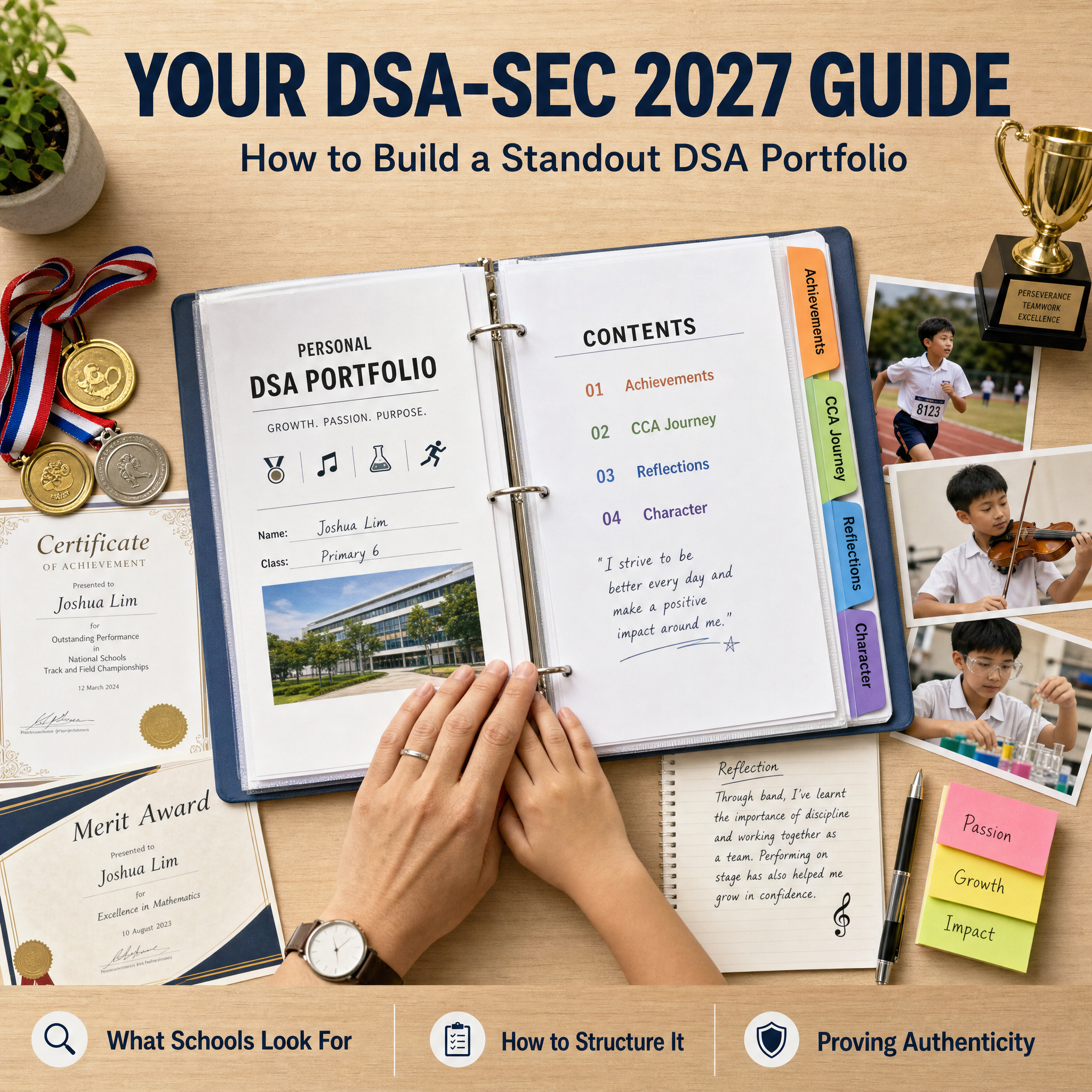
DSA-Sec 2027: How to build a standout portfolio that schools actually want
A winning DSA portfolio is not just a collection of certificates. It is a carefully curated story that showcases your child's genuine passion, growth and potential. For the DSA-Sec 2027 intake, schools are looking beyond a simple list of achievements for evidence of authenticity and a deep-seated curiosity in the chosen talent area.
As the Direct School Admission process has expanded beyond sports and arts to include domains like STEM and Leadership, the portfolio has become a critical tool. With some schools admitting up to 20% of their secondary 1 cohort via DSA, the stakes can feel high. However, focusing on the right elements can turn this stressful task into a meaningful reflection of your child's journey.

Image Credit: RDNE stock project
What belongs in a winning DSA portfolio?
Admissions officers look for a narrative. They want to see the 'why' behind the 'what'. While awards are good, they are only one part of the story. A powerful portfolio balances achievements with evidence of process and personal development.
Achievements and awards: Include significant school-level, zonal or national competition wins relevant to the talent area. This demonstrates a certain level of competency.
Leadership and service: Detail roles as a CCA leader, class monitor or participation in community projects. These highlight valuable soft skills like responsibility, teamwork and empathy.
Evidence of process: This is what separates a good portfolio from a great one. For an art portfolio, this means including sketchbooks and process pages, not just the final piece. For a STEM portfolio, it could be project drafts, coding experiments or logs of failed attempts and what was learned from them.
Personal reflections: A short, well-written reflection for key pieces is crucial. Your child should be able to explain their inspiration, the challenges they faced and what they learned. This demonstrates self-awareness, a highly-prized trait.
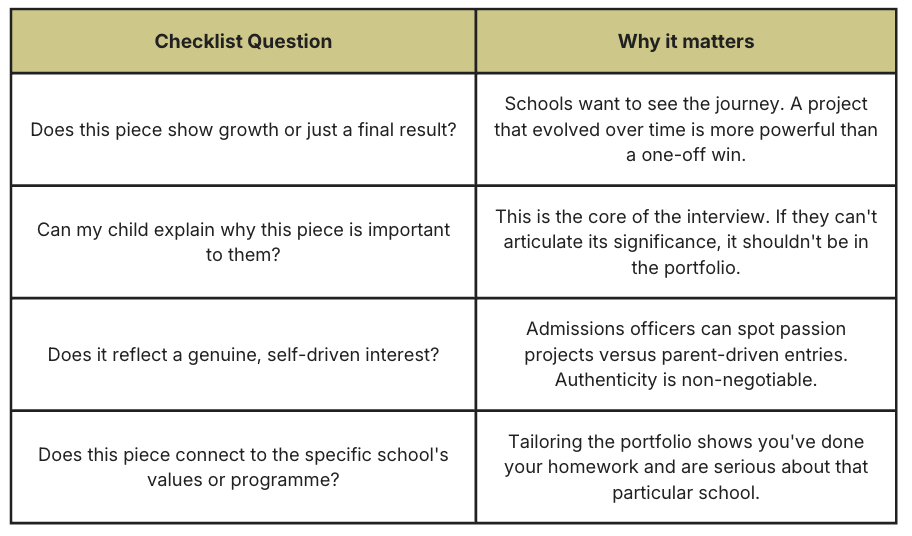
The DSA portfolio authenticity checklist
Before adding an item to the portfolio, ask these questions. This framework helps you prioritise depth over breadth and ensures your child can confidently speak about every single piece during the interview.
How should we structure the portfolio?
Presentation matters. A disorganised portfolio signals a lack of care. Aim for a clean, professional and concise presentation that respects the interviewers' time.
Digital vs. physical: The MOE DSA-Sec Portal requires online submissions, often as a URL to a Google Drive folder or a personal website. However, always prepare a physical portfolio. Bringing a well-organised physical copy to the interview or trial allows your child to reference their work tangible and effectively during discussions.
Keep it concise: A curated 20-page portfolio is far more effective than an 80-page document dump. Use a simple table of contents to help the panel navigate. Group items thematically: for example, 'Competition Work', 'Leadership Experience', 'Personal Projects'.
The interview: bringing your portfolio to life
The portfolio is the script. The interview is the performance. Your child must be the undisputed expert on their ownwork. They will be asked to explain their choices, discuss challenges and articulate their passion. This is often where the real evaluation happens.
Distilling years of work into a compelling narrative and preparing for high-stakes interviews can be daunting. Structuring this story and practising its delivery with expert-led coaching can help a child articulate their passion with confidence, ensuring their portfolio and personality align. This is a crucial step in translating the hard work on paper into a successful admission outcome.
Is the DSA 'arms race' worth the stress?
Many parents feel the pressure of a 'second front' alongside the PSLE. The anxiety is real, and MOE's review of the scheme, announced back in 2024 with details in 2025, reflects an awareness of these concerns. But it's important to frame the DSA process correctly.
It is an opportunity to validate a talent that isn't measured by T-scores. For some students, it's a lifeline to a school environment that can truly nurture their specific abilities. It is also a lesson in itself. Some top-tier specialised schools like NUS High School of Mathematics and Science do not even require a competition portfolio for their selection process, prioritising aptitude tests and interviews instead. This proves that the system is looking for genuine potential, not just a polished record.
Ultimately, building a DSA portfolio should be an affirming experience that celebrates your child's unique talents. It's about showcasing the person they are becoming, not just the awards they have won.
A well-crafted portfolio is a powerful tool in your child’s educational journey. To learn more about how personalised coaching can support your child through various academic milestones, you can explore secondary, JC and IB tuition programmes.

Image Credit: Schoolbag
Frequently asked questions
What should I include in my child's DSA portfolio?
A strong DSA portfolio should include a mix of achievements like awards, leadership or service roles, evidence of process such as drafts or project logs and personal reflections on their work. The goal is to build a narrative of your child's passion and growth in their chosen dsa talent area, not just list accomplishments.
Are awards and certificates the most important part of a DSA application?
No, awards and certificates are not the most important part of a DSA application because schools are looking for the complete story of a child’s journey and potential. While competition wins demonstrate competency, the article stresses that a winning portfolio must also show evidence of process, growth and personal reflection to prove a genuine interest.
How do I make a DSA portfolio look authentic?
You can make a DSA portfolio look authentic by focusing on items that reflect your child's genuine, self-driven interest and ensuring they can personally explain why each piece is important. According to the article, admissions officers can spot passion projects versus parent-driven entries, so authenticity is a critical element for a successful dsa application.
Should I prepare a physical or digital portfolio for the DSA-Sec 2027 intake?
You should prepare both a digital and a physical portfolio for your DSA-Sec 2027 application. The official MOE DSA portal requires an online submission, but having a well-organised physical copy is crucial for the interview stage to help your child effectively discuss their work.
What is the best way to prepare for the DSA interview?
The best way to prepare for the DSA interview is to ensure your child is the expert on their own portfolio and can confidently articulate their passion, choices and challenges. This dsa interview preparation is vital as the interview is where the portfolio is brought to life and where the real evaluation often happens.
Find the Right Learning Support at Every Stage
Building strong study habits takes patience, especially when academic demands pick up. If your child needs an extra hand making difficult topics click, Geniebook offers targeted support across every stage. Find AI-personalised worksheets and live classes for primary and secondary school at Geniebook, comprehensive secondary, IB and JC subject tuition at AfterSkool or dedicated physics masterclasses at Tuition Physics and Best Physics Tuition.