
What Examiners Really Look For in Chemistry Data Handling (2027 O/A-Levels) | AfterSkool Chemistry Tuition
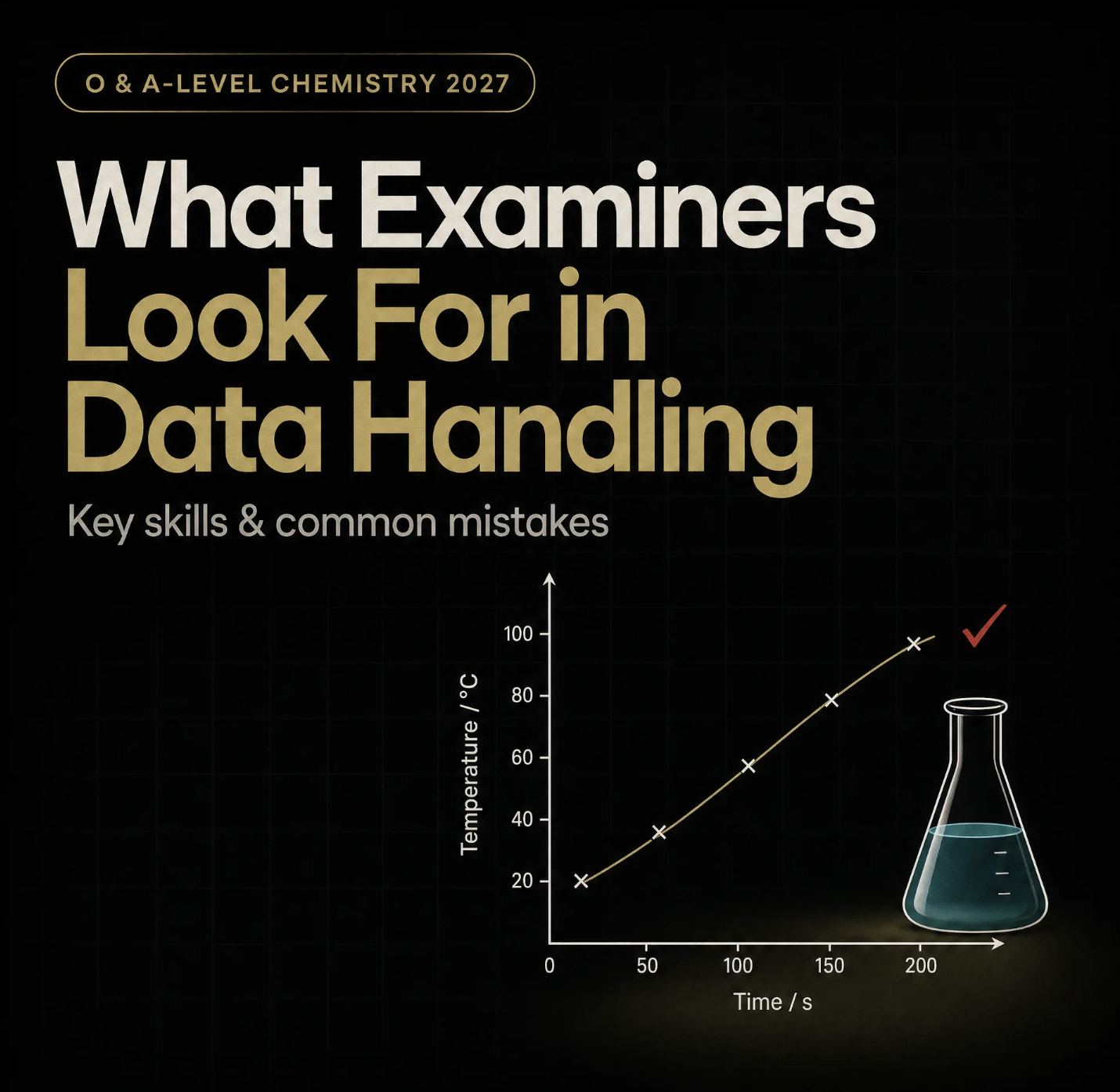
The Direct Answer: What Do Chemistry Examiners Want in 2027?
In the upcoming 2027 GCE O-Level and A-Level Chemistry examinations, examiners are looking for much more than correct answers. They want to see a student's thinking process, specifically their ability to interpret unfamiliar data, present it logically and apply chemical principles in a structured way. With formula sheets becoming standard, the focus has decisively shifted from memory to mastery of application, making data handling a key battleground for top grades. A good Chemistry tuition programme understands this shift and prepares students accordingly.
Are They Just 'Bad at Math' or Is It Something Else?
Many parents worry when their child struggles with calculation-heavy Chemistry topics, assuming it's a weakness in mathematics. More often than not, the issue is not calculation but application. The trend in UK-aligned curricula, which influences our local exams, is to provide equation sheets (like Ofqual's extension through 2027 for GCSEs). The challenge is no longer memorising a formula but selecting the right one and using it in multi-step problems.
Examiners now design questions that test a student's understanding of the relationship between variables. For example, can a student derive a relationship from a graph and then use it in a subsequent calculation? This is a test of problem-solving (Assessment Objective 2, or AO2, in syllabuses like the IGCSE 0620) not just arithmetic.
Image Credit: Monstera Production
The Data Booklet: Why It's a Test Not a Crutch
For IP, A-Level and IB students, the Data Booklet is a constant companion. A common misconception is that it’s a 'cheat sheet' that makes the exam easier. This is a dangerous assumption. For syllabuses like the Cambridge AS & A Level Chemistry (9701) and the IB Chemistry programme, examiners write questions that require intelligent use of the booklet. They are testing a student's ability to locate, extract and apply specific data points like bond energies or standard electrode potentials under pressure.
Pro-Tip from the Trenches: Your child must practise with a clean, unmarked copy of the latest Data Booklet. Examiners have confirmed that students who rely on highlighted or annotated copies during revision build habits they cannot use in the exam hall, leading to panic and lost time. This is a critical habit to build for anyone taking H2 Chemistry tuition.
What Are the Most Common 'Careless' Mistakes That Cost Marks?
Over decades of coaching students, I’ve seen the same heartbreaking mistakes rob deserving students of their A1s. These are not typically due to a lack of knowledge but a lack of exam discipline and precision. Here are the top offenders:
Incorrect Units: This is the number one mark-killer. Forgetting a unit, or mixing up dm³ and cm³, can cascade into multiple lost marks on a single question. It signals a lack of precision to the examiner.
Poor Graphing Skills: A surprising number of marks are lost here. Common errors include not labelling axes with units, choosing a scale that makes the graph too small (less than half the grid), or drawing a shaky line instead of a confident best-fit curve or line.
Unstructured Long Answers: For 4-6 mark questions, examiners are looking for a logical, structured argument. Many students write a dense paragraph, hoping the answer is somewhere inside. A better approach is to break it down: state the scientific principle, apply it to the data given, and clearly link it to the final outcome.
These errors are often repeated because a student studying alone doesn't recognise the pattern. Without an experienced eye to provide consistent feedback on practice papers, these habits can become fossilised. This is where targeted O-Level Pure Chemistry Tuition or JC Chemistry Tuition can make a significant difference, as a good tutor's main role is to spot and correct these ingrained, mark-losing habits before the exam. At AfterSkool, our specialists focus heavily on this type of diagnostic feedback.

Image Credit: Armin Rimoldi
How Can We Prepare for Data Handling Questions at Home?
Building confidence in data handling is about systematic practice. Beyond just doing more papers, the approach needs to be smarter.
1. Use Examiner Reports: These are official documents published by SEAB and Cambridge that are invaluable yet criminally underused. They provide direct insight into what examiners were looking for and where thousands of students went wrong in previous years.
2. Practice Presentation, Not Just Answers: Don't just check if the final number is correct. Redraw the table or graph. Is it neat? Is it clearly labelled? Write out the full explanation. Does it follow a logical structure? This is a key focus for IP Chemistry Tuition, where communication skills are heavily weighted.
3. Timed Drills: Set a timer and attempt only the data analysis questions from a past paper. This simulates exam pressure and trains speed and accuracy in interpreting tables, plotting graphs and performing calculations.
Beyond the Exam: Why Data Skills Matter
Mastering these skills isn't just about clearing the O-Levels or A-Levels. Singapore's economy, particularly in high-value sectors like energy and chemicals on Jurong Island, is built on data. The ability to analyse, interpret and present data clearly is a fundamental competency that universities and employers are desperate for. What your child is learning now is direct preparation for a data-driven world.
If you feel your child could benefit from structured guidance to build these essential data handling skills, you can find out more about AfterSkool's Secondary and JC chemistry programmes.
Frequently asked questions
Why is my child struggling with chemistry calculations even if they are good at maths?
Your child likely struggles with applying chemical principles to unfamiliar data, not the mathematics itself, which is a common challenge in modern Chemistry exams. With formula sheets becoming standard in exams like the GCE O-Levels, the focus has shifted from memorising equations to selecting the correct one for multi-step problems. This tests problem-solving and application skills rather than pure calculation, an area where targeted secondary chemistry tuition can provide focused support.
What are the most common careless mistakes that lose marks in O Level and A Level Chemistry?
The most common mistakes costing students marks in O-Level and A-Level Chemistry are using incorrect units, demonstrating poor graphing skills and providing unstructured long answers. Examiners penalise for forgetting or mixing up units, not labelling graph axes with units or drawing a graph that is too small. For high-mark questions, students often fail to present a logical argument, a habit that consistent feedback during O-Level Pure Chemistry Tuition or JC Chemistry Tuition can help correct.
How should my child use the A-Level Chemistry DataBooklet correctly in the exam?
Your child should use the A-Level Chemistry Data Booklet as an active tool to locate, extract and apply specific data points like bond energies, not as a passive 'cheat sheet'. For syllabuses like the Cambridge AS & A Level Chemistry (9701), examiners write questions that require intelligent use of the booklet under pressure. It is vital to practise with a clean, unmarked copy, as relying on highlighted versions during revision builds habits that cannot be used in the exam hall, a key point covered in effective h2 chemistry tuition.
What is the best way to prepare for chemistry data handling questions at home?
The best way to prepare for chemistry data handling questions is through systematic practice that includes using official examiner reports, focusing on clear presentation and doing timed drills. Instead of only checking final answers, students should analyse official reports from SEAB or Cambridge to learn from common mistakes made by previous cohorts. Practising presentation by redrawing graphs and writing structured explanations, a skill emphasised in IP Chemistry Tuition, is also key. This approach ensures readiness for the demands of A-Level Chemistry Tuition and exams.
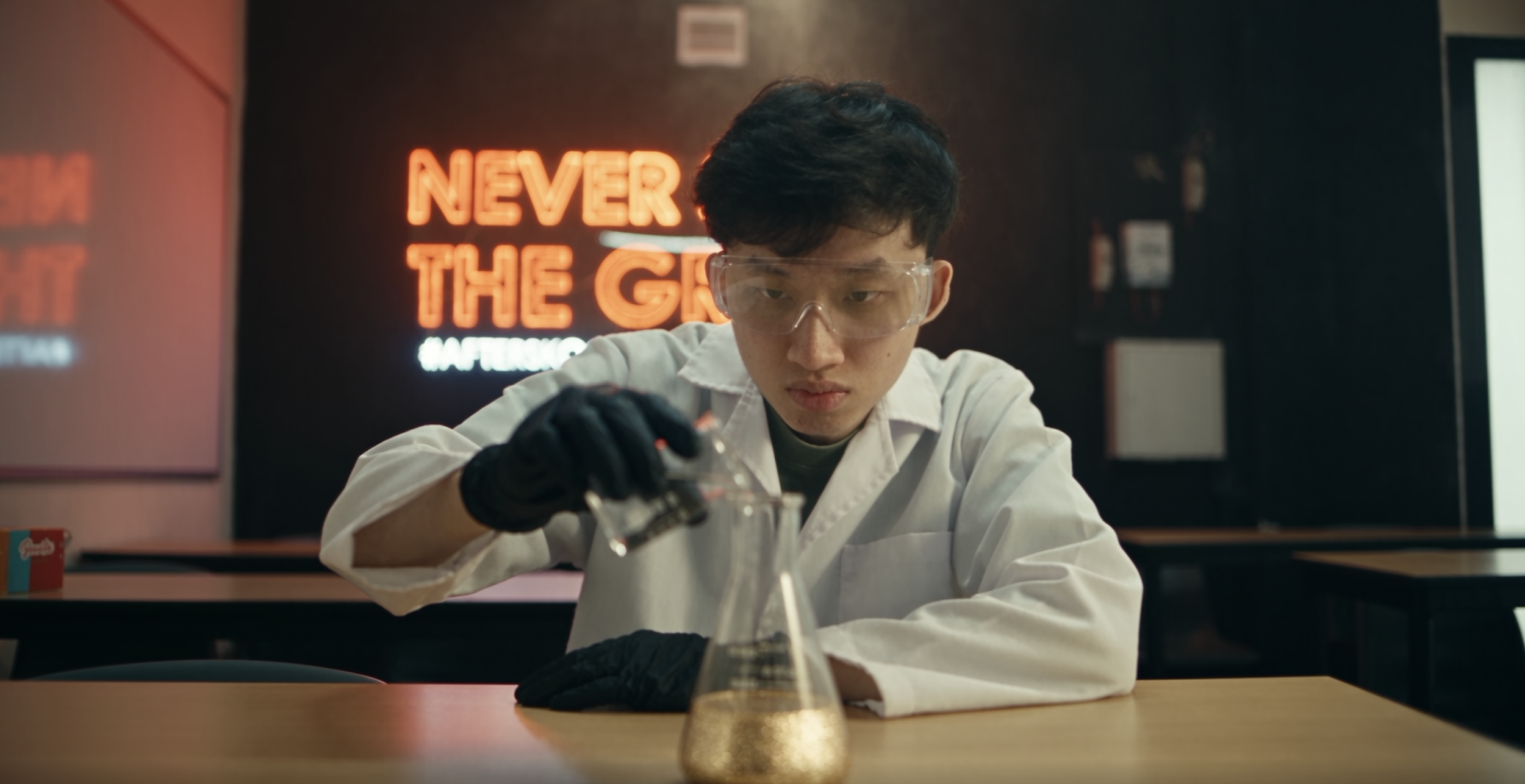
Meet our star Chemistry tutor Gerald, with over 12 years of teaching experience!
Find the Right Learning Support at Every Stage
Building strong study habits takes patience, especially when academic demands pick up. If your child needs an extra hand making difficult topics click, Geniebook offers targeted support across every stage. Find AI-personalised worksheets and live classes for primary and secondary school at Geniebook, comprehensive secondary, IB and JC subject tuition at AfterSkool or dedicated physics masterclasses at Tuition Physics and Best Physics Tuition.