
How To Prepare for A Level H2 Mathematics: The Ultimate Revision Guide
Preparing for GCE A Level H2 Mathematics can feel overwhelming at first. The syllabus is broad, the questions can be challenging, and the competition is strong. However, with the right strategy, consistent practice, and a clear understanding of concepts, you can approach the exam with confidence.
Here is a simple and practical revision guide to help you do your best.
Understand the Syllabus Clearly
Before you start revising, make sure you understand what is tested. The Singapore Cambridge GCE A Level H2 Mathematics syllabus, set by the Singapore Examinations and Assessment Board (SEAB), covers Pure Mathematics (such as calculus, vectors, complex numbers, and differential equations) and Statistics (including probability and hypothesis testing).
Download the official syllabus document and use it as a checklist. Highlight topics you are confident in and mark out those you need more practice with. At the bottom of this article, we’ve prepared a simple checklist of the important topics to pay attention to, and the mathematical problems you’ll need to practise.
Build Strong Conceptual Foundations
It bears repeating that H2 Mathematics is not about memorising formulas blindly. You need to understand why formulas work and when to apply them.
For example:
In calculus, know what differentiation and integration represent geometrically.
In statistics, understand what a p-value means instead of just memorising procedures.
When you truly understand a concept, you are more flexible when tackling unfamiliar or application-based questions.
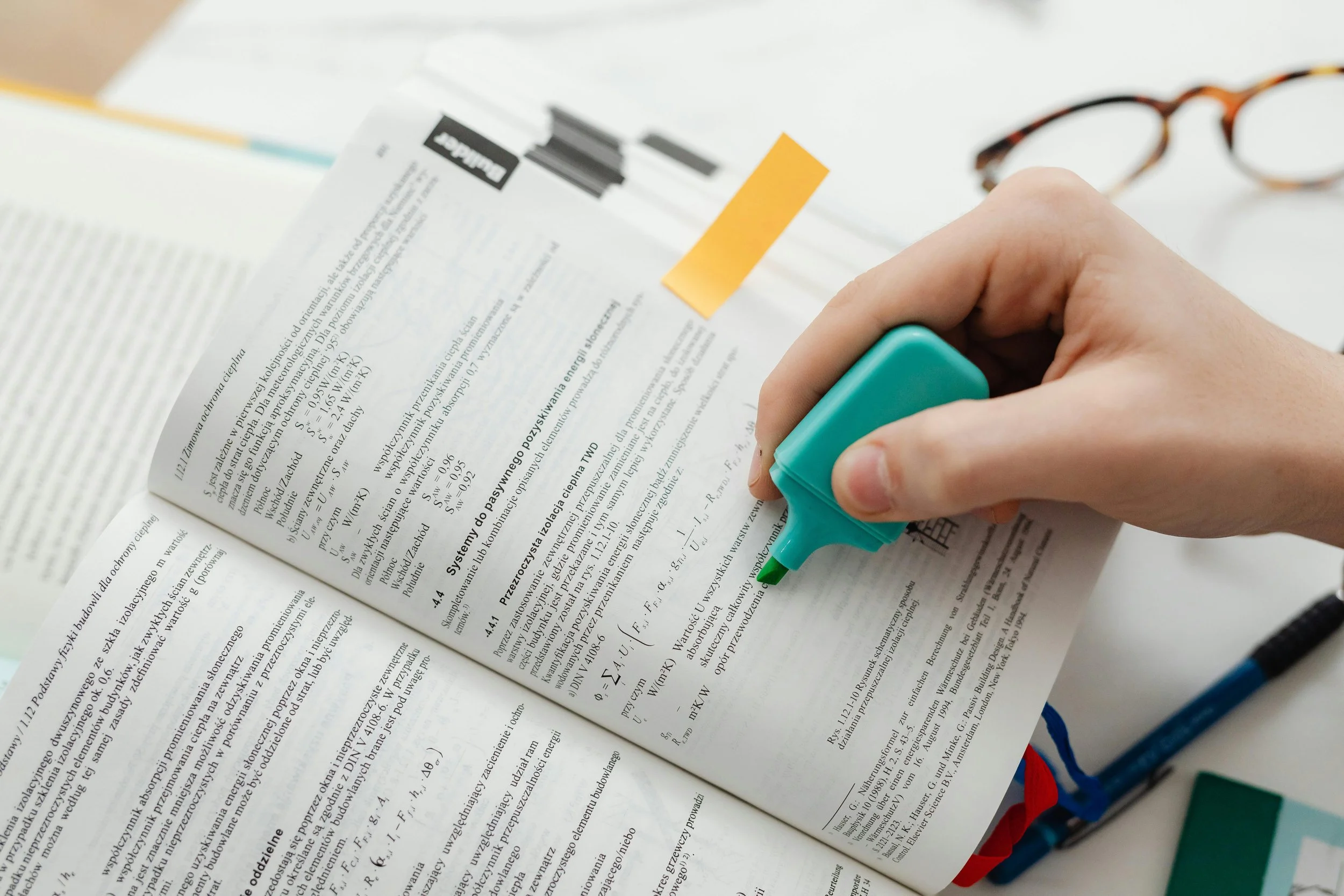
Image Credit: www.kaboompics.com
Practise Consistently, Not Just Before Exams
Mathematics is a skill. The only way to improve is through regular practice.
Start with:
Tutorial questions from school
Topical Ten-Year Series (TYS) questions
School prelim papers
Practise under timed conditions as the exam approaches. This trains you to manage time effectively during the actual paper. After attempting a paper, always review your mistakes carefully. Ask yourself:
Did I misunderstand the concept?
Was it a careless mistake?
Did I run out of time?
Learning from mistakes is one of the fastest ways to improve.
Master Your Weak Topics Instead of Avoiding Them
Most students have certain “fear topics”, perhaps complex numbers or hypothesis testing.
Do not avoid them.
Instead:
Rewatch your teacher’s explanations.
Redo basic questions before moving to harder ones.
Seek consultation if needed.
Clearing up weak topics early prevents panic during the final revision period.

Image Credit: Andy Harbour
Develop Good Exam Techniques
Scoring well in H2 Mathematics is not just about knowing how to solve questions. You must also:
Show clear and logical working.
Use correct mathematical notation.
State necessary conditions.
Label graphs and define variables properly.
Stringent examiners will take away marks when they spot errors in these aspects.
Create/Follow a Structured Revision Plan
Avoid last-minute cramming. Instead, create a revision timetable that:
Covers all topics.
Allocates more time to weaker areas.
For practise, attempt a full exam paper closer to the exam, and time yourself.
Break your study sessions into focused blocks (for example, 1–2 hours each), and take short breaks in between to stay mentally sharp.
Take Care of Your Well-being
Finally, remember that your physical and mental health matter. Get enough sleep, eat properly, and take breaks to connect with your friends and family, and with nature. A clear mind performs better than a stressed one.
Confidence comes from preparation. When you have practised consistently and revised systematically, you will walk into the examination hall feeling ready.

Image Credit: Andy Harbour
Your Simple Pre-Exam Study Guide
At a glance, here’s what you need to understand and practise:
1. Functions and Graphs
This is one of the foundations of the subject.
You’ll need to practise:
Composite and inverse functions
Graph sketching and transformations
Solving equations and inequalities
Understanding domain and range
These skills are often combined with calculus questions in exams.
2. Sequences and Series
This topic focuses on patterns and summations.
Key areas:
Arithmetic progressions (AP)
Geometric progressions (GP)
Summation of series
Sigma notation and applications
Students must recognise patterns and form formulas quickly.
3. Vectors
Pro tip: Visualise vector problems in order to solve them correctly.
Be familiar with:
Vectors in 2D and 3D
Lines and planes
Scalar (dot) product
Vector (cross) product
Geometric interpretation of vectors
Questions often involve geometry in three dimensions.
4. Complex Numbers
A topic that is usually new for JC students.
Important concepts:
Cartesian form
Polar form
Argand diagrams
Modulus and argument
Roots of complex numbers
Students must move between different forms easily.
5. Calculus (Very Important)
This usually takes the most revision time.
Practise:
Differentiation techniques
Applications of derivatives (max/min problems)
Integration methods
Definite integrals and area
Maclaurin series
Differential equations
Many exam questions combine calculus with graphs or modelling problems.
6. Probability and Statistics
This makes up a large part of Paper 2.
Main topics:
Permutations and combinations
Probability
Discrete random variables
Binomial, Poisson and normal distributions
Sampling methods
Hypothesis testing
Correlation and linear regression
Exam questions are often framed as real-world scenarios (eg. manufacturing quality assessment, population census, etc), and students must interpret data and apply formulas correctly.